
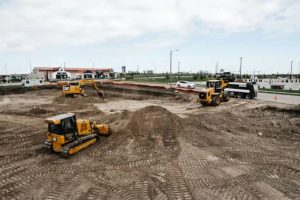
 Every successful construction project starts with more than just a good idea. It starts with a site that’s been prepared well. You skip or rush through the preliminary work and you’ll face serious issues like unstable ground or noncompliance with zoning laws. That’s where construction site development comes in as the critical first phase that sets the stage for everything that follows. In this piece, we’ll walk you through what site development is, the construction site development process, and the construction site development steps you need to know. We’ll also cover the key components of a site development plan to help you avoid pricey mistakes and ensure your project starts on solid ground.
What Is Construction Site Development?
Construction site development refers to the improvements and preparatory work done to make a piece of land ready for construction. The process involves analyzing site characteristics, implementing infrastructure improvements, and addressing potential risks before building begins. Raw land transforms into a safe and build-ready space that meets all safety, environmental, and legal requirements.
Site development is different from land development, though the terms often get confused. Land development involves transforming raw land into buildable property. This includes utilities, roads, and drainage systems across a broader parcel. Site preparation focuses on preparing a specific plot for construction. Grading, excavation, and foundation readiness are part of this phase.
Construction site development sits between these two phases. It has the design and approval process needed for a site development project. The process has land clearing, soil testing, surveying, utility routing, excavation, grading, and infrastructure installation. Site features require design and engineering, and state, local and federal permits need coordination.
Proper site development matters. Construction that begins without it can interfere with project plans midway and hinder building permit approvals. Financial and legal risks emerge.
The Construction Site Development Process: Step-by-Step
The construction site development process follows a logical sequence that begins long before equipment arrives on site. You can anticipate requirements and coordinate with engineers, contractors, and utility providers better when you understand this progression.
- Site evaluation and planning are the foundations of any successful project. We conduct topographic surveys to map elevations and terrain features during this phase. Geotechnical investigations assess soil conditions and locate existing underground utilities. Soil testing reveals bearing capacity, moisture content, and potential stability issues that influence foundation design. Engineers develop construction plans at the same time while securing permits from local authorities and coordinating with utility companies.
- Land clearing and site preparation begins after approval. Trees, vegetation, existing structures, and debris get removed to create a clean work area. We install erosion control measures like silt fencing and stabilized construction entrances before earthmoving starts. This protects nearby waterways and properties.
- Excavation and grading shape the site according to engineering specifications. Bulk earthwork establishes overall elevations and trenches are dug for utility lines. Grading ensures proper drainage away from future structures. Soil compaction follows to create stable building pads.
- Underground utility installation brings infrastructure to the site at the end. Water mains, sanitary sewer lines, stormwater systems, and other utilities are installed, tested, and inspected before any vertical construction begins.
Key Components of a Site Development Plan
A complete site development plan documents every aspect of your construction site development project. These plans guide contractors, satisfy regulatory agencies and prevent conflicts during construction.
- Stormwater management is the foundation of these requirements. Projects disturbing one acre or more require a Stormwater Pollution Prevention Plan that outlines erosion control measures, sediment management practices and inspection schedules. This plan must address how you’ll manage runoff during construction and prevent pollution from entering waterways.
- Drainage engineering requires calculations for storm events signed by a registered professional engineer. You’ll need to show existing elevations, drainage boundaries, ponding depths and how your project affects adjoining properties. Detention ponds, if applicable, must comply with local drainage criteria.
- Utility coordination requires detailed plan and profile drawings showing water lines, fire hydrants, storm sewer lines, manholes, inlets and sanitary sewer systems. You must document clearances between utilities, along with minimum depths of cover and connection points to public infrastructure.
- Site access planning covers how equipment and materials reach the construction area. Route selection should think about underground services, right-of-way restrictions, vehicle maneuverability and turning radius requirements. Proper access planning prevents damage to existing infrastructure and maintains project schedules.
- Erosion control documentation specifies both prevention and sediment control practices. Erosion controls are easier and work better than managing sediment-laden runoff.
Construction site development might require substantial upfront investment, but skipping this phase creates much costlier problems down the road. We’ve covered the steps from original site evaluation through utility installation and the critical components your development plan must include. So treat this preparatory work as your project’s foundation. You’re protecting your budget, timeline and long-term structural integrity when you invest time in proper site development.
FAQs
Q1. What exactly does construction site development include? Construction site development includes all the preparatory work needed to transform raw land into a build-ready space. This encompasses site surveys, soil testing, land clearing, grading and excavation, utility installation, and infrastructure setup. The process ensures the site meets all safety, environmental, and legal requirements before actual building construction begins.
Q2. How is site development different from land development? Land development involves transforming raw land into buildable property across a broader parcel, including installing utilities, roads, and drainage systems. Site development focuses on preparing a specific plot for construction and includes the design, engineering, and permit coordination necessary for that particular building project. Site development sits between land development and the actual construction phase.
Q3. Who is responsible for creating a site development plan? A site development plan must be prepared by licensed professionals such as surveyors, civil engineers, or architects. For projects involving new foundations, significant earthmoving, or permanent structures, the plan requires a professional stamp. Only very minor projects, like small garden sheds, might accept hand-drawn plot plans.
Q4. Why is proper site development important before construction? Proper site development prevents serious issues like unstable ground, improper drainage, and noncompliance with zoning laws. Starting construction without adequate site development can interfere with project plans midway, hinder building permit approvals, and create significant financial and legal risks. It protects your budget, timeline, and long-term structural integrity.
Q5. What stormwater management requirements apply to construction sites? Projects that disturb one acre or more require a Stormwater Pollution Prevention Plan. This plan must outline erosion control measures, sediment management practices, inspection schedules, and how runoff will be managed during construction. It must also demonstrate how the project will prevent pollution from entering waterways and address impacts on adjoining properties.
We Provide Site Development Services
We can handle everything from initial site clearing and grading to utility trenching and foundation preparation, ensuring your land is properly prepared for whatever you’re building.
> Learn More
Contact Us (859-393-1027) For a Consultation
—
 About Webb’s Excavating
 About Webb’s Excavating
At Webb’s Excavating, we provide dependable excavation services for residential, commercial, and site development projects throughout Northern Kentucky and Cincinnati. From site preparation, grading, trenching, and drainage solutions to land clearing and utility excavation, our experienced team delivers safe, efficient, and precision-driven work that keeps your project on schedule. Whether you’re breaking ground on new construction or improving an existing property, we’re the trusted partner to get the job done right the first time.
> Learn More